By the time a nurse or caregiver walks through the door for the first visit, patients and families have usually already decided how they feel about your agency.
They’ve judged your professionalism from your website. They’ve formed an opinion about your reliability from your booking and intake process. They’ve gauged your empathy and organization from every email, call, and confirmation you send.
In other words, the home care patient experience begins long before the first vital sign is taken or the first dressing is changed. And in a world where families are anxious, time-poor, and often overwhelmed, those early moments can either build confidence—or amplify doubt.
The good news: with the right digital workflows, you can shape this home care agency first impression intentionally. From online discovery to onboarding and scheduling, every step can communicate “you can trust us” long before the first visit happens.
First Impressions in Home Care Start Online
For most families, the journey begins with a search: “home care nurse near me” “wound care at home” “private foot care visits”
Before they ever speak to you, they encounter:
Your website or landing page
Your online reviews
Your social profiles
Any content or resources you’ve shared
All of this feeds directly into patient trust in home care. A dated website, confusing information, or broken links can make families wonder: If their online presence is disorganized, what will happen with my care?
On the other hand, a clean, clear digital presence immediately signals that your agency is modern, attentive, and detail-oriented. If you’re working on improving what patients see and feel online, you may find our articles on optimizing patient experience online and patient experience as a competitive advantage especially helpful.
The Invisible Part of the Home Care Patient Experience: Before Day One
Families often assume that the in-home visit is where care “starts.” Operationally, you know it starts much sooner. Every step in between also shapes the home care patient experience.
1. The first inquiry: call, form, or message
Whether patients reach out via phone, an online form, or a booking link, they expect:
A quick acknowledgment (even an automated one)
Clear next steps
A tone that feels human, not robotic
If they send a message and hear nothing for 48 hours, their confidence drops. If they fill out a form and then repeat all information on the phone, they perceive your agency as disorganized.
This is where patients and families quietly evaluate you:
Are you asking the right questions?
Do you seem prepared for their specific situation?
Do you repeat yourself or lose details?
When intake is structured and digital, you show families that their information is taken seriously. You don’t ask the same questions three times. You arrive at the first visit already understanding goals, risks, and preferences.
Reliable scheduling is one of the biggest trust signals in home care.
Families notice:
How easy it is to book or change a visit
How clearly you communicate dates and times
Whether reminders feel helpful or chaotic
When you use digital scheduling and automated reminders, you reduce confusion, no-shows, and last-minute surprises. This shows patients that you respect their time and their home—before you ever step inside.
How Digital Workflows Build Patient Trust in Home Care
Trust isn’t built by one big gesture—it’s built by many consistent, small interactions. Digital workflows help you deliver those interactions with precision.
Here’s how they support patient trust in home care from day one:
Consistency: every patient, the same high standard
When you rely only on manual processes, the experience varies depending on who answers the phone or handles the paperwork.
Digital workflows standardize:
How inquiries are captured
What questions are asked during intake
How and when reminders and follow-ups are sent
This consistency makes your home care agency first impression feel intentional, not accidental.
Transparency: fewer surprises, more clarity
Families feel safer when they know:
Who is coming and when
What services will be provided
How billing and payments work
When this information is shared clearly through digital confirmations, patient portals, or email sequences, families feel more in control of their situation. If you’re exploring ways to modernize these touchpoints, check out our article on how to create a digital experience that engages your patients.
Professionalism: your systems reflect your care
From online forms to digital consent to visit documentation, your systems tell a story.
Sloppy or outdated tools suggest a “good intentions, poor structure” agency
Clean, simple, digital workflows suggest “we care and we’re organized”
That impression matters even more in home care, where you are entering a patient’s personal space. Our guide on designing a premium patient experience in home care visits explores how to extend this professional feeling into the visit itself.
Micro-Moments That Make or Break Your Home Care Agency First Impression
If you zoom in on the early part of the home care patient experience, there are several “micro-moments” that strongly influence how patients and families perceive you:
The moment they land on your website Do they immediately understand who you serve and how you help?
The moment they submit an inquiry Do they feel ignored or reassured?
The moment they receive their first confirmation Is it clear, friendly, and complete?
The moment they realize you remembered their details Do they feel like a number in a system—or a person whose story you know?
Each of these micro-moments can be supported by digital workflows that are simple on the surface, but powerful behind the scenes. For a broader strategic view, our digital playbook for managing small home nursing teams shows how these workflows connect across your operations.
How CompanyOn Helps You Win Trust Before the First Visit
CompanyOn was built to help home care providers and small agencies offer a modern, trusted experience without needing a large back-office team.
With CompanyOn, you can:
Capture inquiries and patient information digitally, so nothing gets lost
Build structured onboarding workflows that make new families feel guided, not overwhelmed
Use digital scheduling, confirmations, and reminders to keep everyone informed
Connect your pre-visit workflows with documentation and billing, ensuring the story is consistent from first contact to follow-up
Our platform is designed so that every step supports the home care patient experience—long before the first visit and long after it.
Final Thoughts: Trust Starts Long Before the First Visit
Patients and families don’t wait for the first home care visit to decide if they trust you. They start judging your agency from the moment they search for help, click on your website, or submit an inquiry.
By designing digital workflows that are clear, consistent, and patient-centered, you can:
Make a strong home care agency first impression
Build durable patient trust in home care
Turn anxious inquiries into confident, long-term relationships
If you’re ready to upgrade the way patients and families experience your home care agency before day one, CompanyOn can help you turn every digital touchpoint into proof that they’re in safe, professional hands.
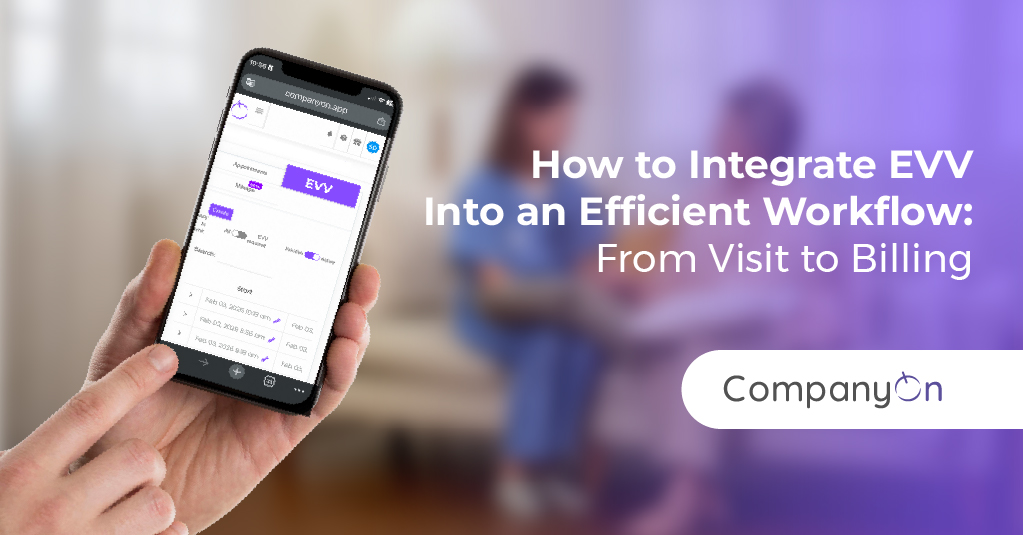
Learn how to connect EVV with scheduling, visit tracking, and billing. Build an efficient home care workflow that reduces errors and speeds up payments.
Discover how patients and families form opinions about your home care agency before the first visit—and how digital workflows help you build trust from day one.
Discover how EVV can do more than meet regulations. Learn how the right EVV setup brings clarity to scheduling, visits, and billing in home care agencies.