Automate Appointment Reminders Without Sounding Robotic: A More Human Digital Experience

In today’s fast-paced healthcare environment, appointment reminders are a must. They reduce no-shows, improve scheduling efficiency, and save valuable time for staff. But here’s the catch: if your reminders sound cold, generic, or overly automated, patients may ignore them—or worse, feel like just another number.

That’s where smart automation for small clinics makes a difference. With the right tools and approach, you can send timely, professional reminders that feel personal, caring, and aligned with your brand.

In this article, you’ll learn how to automate appointment reminders that work—without sacrificing the human connection that keeps patients coming back.
CompanyOn

Why Appointment Reminders Matter More Than Ever

  • No-shows cost you revenue and time. Even one missed appointment a day can represent thousands in annual losses.

  • Patients are busy. Life happens—reminders help patients stay on track.

  • Digital habits are growing. Most patients expect texts or emails, not phone calls.

But automation without empathy can lead to a sterile experience. To be effective, reminders need to be timely, friendly, and helpful.

How to Automate Reminders Without Losing the Human Touch

1. Personalize Every Message

Use your software to automatically include the patient’s name, appointment date/time, provider’s name, and location. A message that says:

Hi Sarah, just a friendly reminder of your visit with Dr. Chen on Tuesday at 10:30 AM. We look forward to seeing you at CompanyOn Clinic!

…is far more engaging than:

You have an appointment scheduled. Reply YES to confirm.

The first builds connection. The second feels like a spam text.

✅ CompanyOn lets you personalize automated reminders with dynamic fields that adjust based on the patient and appointment.

2. Choose the Right Channels

Not every patient prefers the same method of communication. Some like SMS. Others prefer email. A few may still want a call.

Use your intake form or patient profile to let people choose their preferred channel. This small touch shows respect for their communication style—and increases response rates.

💡 Learn how to improve engagement by offering options in How to Better Engage Your Clients by Leveraging Technology.

3. Time It Right

Don’t wait until the last minute. A strategic reminder schedule looks like this:

  • First reminder: 48 hours before the appointment (gives time to reschedule if needed).

  • Final reminder: 2–4 hours before (prevents same-day forgetfulness).

With automation, you can set this schedule once and trust that it will run without manual intervention.

4. Use Friendly, Human Language

Avoid cold or robotic language like “This is a system-generated notification.” Instead, keep it warm, simple, and professional:

  • “We’re excited to see you soon!”

  • “Got questions before your visit? Just reply to this message.”

Your brand voice should come through, even in automated messages.

5. Make It Easy to Confirm or Reschedule

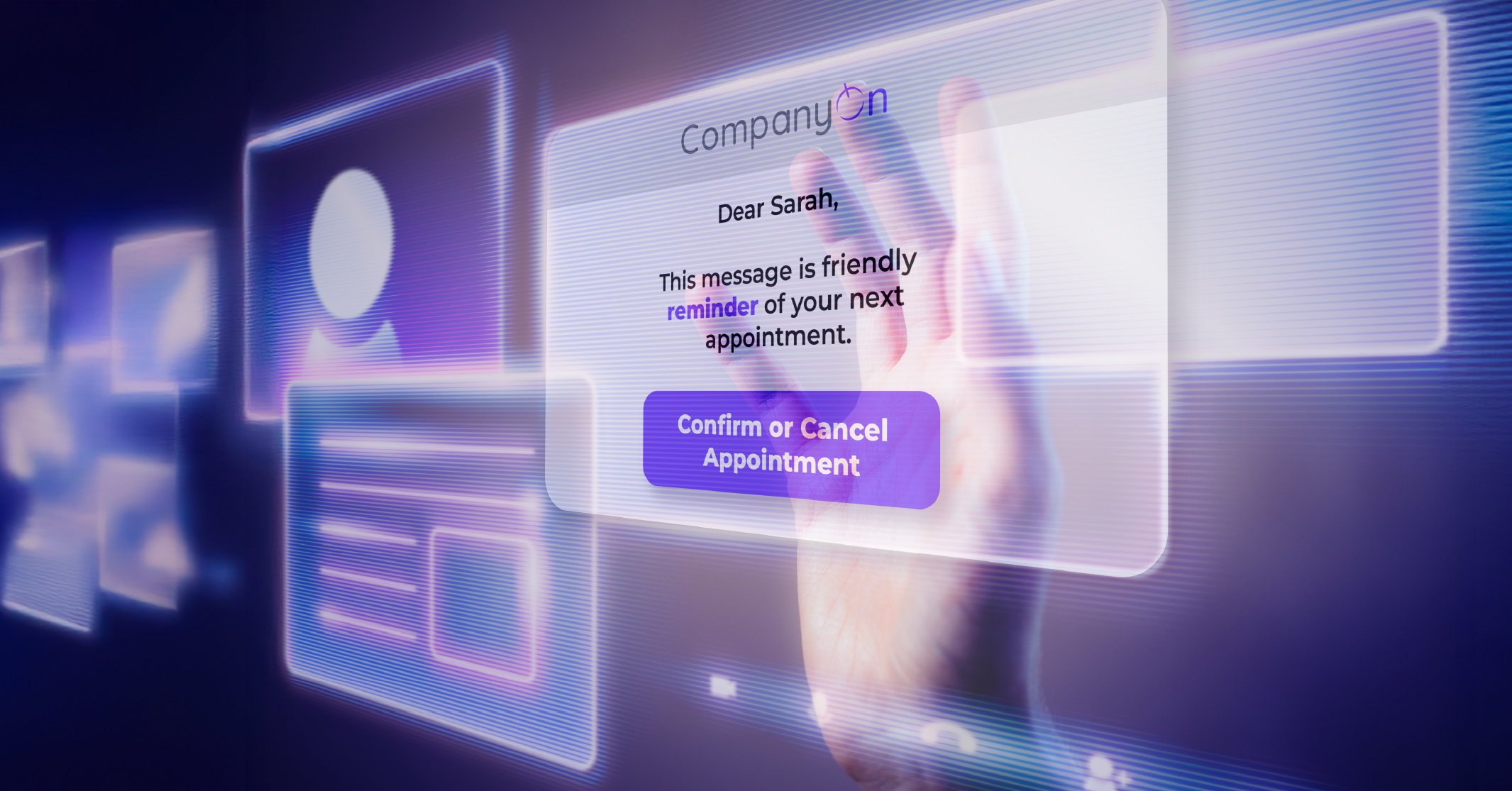
A reminder is only useful if the patient can act on it. Include a one-click confirmation button or a link to reschedule their visit.

When patients can respond without having to call your clinic, they’re more likely to stay engaged.

🔁 Explore how online booking systems integrate with reminders to simplify this process.

6. Reinforce Trust and Privacy

Patients appreciate transparency. Let them know that reminders are secure and their information is protected. Include your clinic’s name in every message to avoid confusion and build trust.

Real Benefits of Smart Reminder Automation

Practices using humanized automation for reminders report:

  • Up to 60% reduction in no-show rates

  • Less admin time spent chasing appointments

  • Higher patient satisfaction, due to thoughtful digital experiences

Automation for small clinics isn’t just about saving time—it’s about creating better patient relationships at scale.


How CompanyOn Helps You Automate Without Sounding Automated

With CompanyOn, you can:

  • Send fully personalized reminders via SMS and email

  • Let patients confirm, cancel or reschedule in seconds

  • Automate follow-ups post-appointment

  • Customize language and timing to match your practice’s tone

Our platform is built for solo practitioners and small clinics that need simple, effective tools to run smoother — without losing the human side of care.

Learn more about our appointment management features.


Conclusion

Appointment reminders are one of the easiest and most impactful areas to automate in your clinic. But they don’t have to feel robotic. With the right approach, you can build a system that’s efficient and human.

By combining thoughtful messaging, patient preferences, and automation tools, you’ll not only reduce no-shows—you’ll reinforce trust, loyalty, and connection with every interaction.

Ready to modernize your reminder system without sacrificing the personal touch? Explore how CompanyOn helps small practices create a more human digital experience.

Ready to make the switch?

Try Our Platform Free for 14 days.

See CompanyOn in Action

Schedule A Free 1:1 Personalized Demo

Is Your Practice Truly Patient-Centered? Use This Checklist to Find Out

Every clinic claims to care about patients — but being truly patient-centered means something deeper. It means consistently delivering care that respects your patient’s time, preferences, goals, and experience at every step of their journey.

In today’s healthcare landscape, patients expect more than just clinical competence. They value personalization, transparency, and convenience. So, how do you know if your practice is aligned with those expectations?

This article walks you through a practical patient-centered care checklist to evaluate where you stand and where you can improve — so your practice not only retains patients, but stands out as a modern, trusted provider.

digital audit for clinics

1. Accessibility and Convenience

Ask yourself:

  • Do you offer online appointment booking that works on mobile?

  • Can patients complete forms digitally before arriving?

  • Do you provide telehealth options for those who can’t come in person?

  • Are your hours and communication channels flexible enough to meet patient needs?

Modern patients demand ease of access. Streamlining your scheduling and intake processes can significantly boost satisfaction. Learn more in Making Scheduling Instant and Easy

2. Clear and Compassionate Communication

Effective patient-centered care depends on communication. Consider:

  • Are patients informed ahead of their appointments about what to expect?

  • Do you use clear, jargon-free language in reminders and follow-ups?

  • Is your team trained to listen actively and respond empathetically?

  • Do you follow up after appointments with summaries or next steps?

If you’re unsure, explore how to better engage your clients by leveraging technology

3. Personalization of Care

Patients are not all the same — and they don’t want to be treated like they are. Reflect on:

  • Do you tailor your communication based on patient preferences (email, text, call)?

  • Are care plans created with patient input and goals in mind?

  • Do you acknowledge and accommodate individual concerns, values, or cultural contexts?

To understand how small, tailored interactions drive loyalty, read Digital Micro-Moments: The Secret to Patient Loyalty in 2026

4. Transparency and Patient Empowerment

Trust grows with transparency. Evaluate if:

  • Patients can access their records, notes, or treatment plans through a portal.

  • You explain billing, policies, and expectations clearly and upfront.

  • You actively encourage questions and make it easy for patients to reach out.

A well-designed patient management system can centralize this experience and empower patients throughout their journey.

5. Environment and Digital Experience

Patient-centered care also means creating an environment — both physical and digital — that feels safe, respectful, and professional. Ask:

  • Is your clinic clean, welcoming, and inclusive?

  • Are your emails, forms, and portals easy to use and mobile-friendly?

  • Do patients feel genuinely heard during visits or online interactions?

Learn how to enhance your digital experience in How to Create a Digital Experience That Engages Your Patients

6. Feedback and Continuous Improvement

A truly patient-centered practice listens and adapts. Reflect on:

  • Are you collecting patient feedback consistently (surveys, reviews, follow-ups)?

  • Do you take action based on that feedback and communicate changes to patients?

  • Do patients feel that their opinions actually matter?

Learn to turn input into growth in Turning Patient Feedback Into a Competitive Advantage for Your Practice

How Did You Score (Mentally)?

If you found several areas where your answer is “no” or “not sure,” that’s a sign there’s room to grow. That’s a good thing — because patient-centered care isn’t about being perfect. It’s about being intentional and continuously improving.

How CompanyOn Can Help You Deliver Patient-Centered Care

CompanyOn is designed for small clinics and solo practitioners who want to modernize their care without complexity. From online booking and automated intake to digital consent, reminders, and secure portals — we help you simplify your workflow and put patients first.

Discover how you can make your practice more people-focused today with CompanyOn’s platform

Conclusion

Patient-centered care is no longer a trend — it’s a standard. And patients are quick to notice when a clinic doesn’t deliver on it. By evaluating your systems and embracing this patient-centered care checklist, you position your practice for greater trust, retention, and long-term success.

Are you ready to become the clinic patients rave about?

Ready to make the switch?

Try Our Platform Free for 14 days.

See CompanyOn in Action

Schedule A Free 1:1 Personalized Demo

How to Reduce the Time Between First Visit and Treatment Without Losing Patients

One of the most overlooked causes of patient drop-off in small clinics and solo practices is delay. When there’s too much time between a patient’s first visit and their actual treatment, engagement drops — and patients may look elsewhere.

In a competitive healthcare environment, you can’t afford to lose leads after they’ve already contacted or visited your practice. The solution? Optimize your patient intake process to minimize delays and move quickly from initial contact to care delivery.

In this article, we’ll walk through practical strategies to reduce intake friction, increase conversion, and ensure more of your first visits lead directly to treatment — without compromising care quality or compliance.

digital audit for clinics

Why Reducing Intake-to-Treatment Time Matters

  • Patients lose interest fast. Healthcare is full of options, and even a 48-hour delay can result in lost business.

  • Unnecessary admin delays hurt your bottom line. Time is money — for you and your patients.

  • Long gaps create confusion and anxiety. Patients feel uncertain about what comes next when there’s no clear, timely communication.

If your practice struggles with new leads that don’t convert into clients, this is likely one of the key bottlenecks.


1. Digitize and Automate Your Intake Forms

Manual paperwork slows everything down. When patients are asked to arrive early to fill out forms, delays are inevitable.

Solution: Implement online forms that patients can complete at home, on their own time, before the first appointment. Use a secure, mobile-friendly platform that stores and syncs data directly with your patient records.

💡 Check out our dynamic digital forms feature to streamline intake and reduce manual errors.


2. Offer Immediate Online Booking Options

If new patients have to call your office or wait for a reply to an email, you’re already losing time — and potentially, the client.

Solution: Use an integrated online booking system that allows patients to self-schedule their first visit instantly, while capturing all necessary intake data upfront.

🎯 Learn how to implement this in your practice in Making Scheduling Instant and Easy.


3. Pre-Qualify and Screen with Smart Forms

Not every inquiry is a good fit — and that’s okay. But the longer it takes to determine that, the more time and energy you waste.

Solution: Use short pre-intake screening forms to identify the patient’s needs, eligibility, and urgency level. This helps your team prioritize care and prep properly.

You can even automate these forms using conditional logic within CompanyOn’s patient intake features.


4. Automate Follow-Ups Within 24 Hours

Many clinics lose patients after the first visit simply because they don’t follow up — or do it too late.

Solution: Use automated email or SMS follow-ups to send next steps, thank-you messages, or booking links immediately after a first contact or visit. Fast communication builds trust and keeps momentum going.


5. Eliminate Repetition for Returning Clients

If a patient returns for treatment and has to repeat the entire intake process, it creates frustration and friction.

Solution: Use digital tools that auto-populate known patient data, so forms are shorter, onboarding is smoother, and visits start faster.

✨ This is where integrated patient management software shines — centralizing records and syncing patient data in real time.


6. Use Waitlists to Fill Gaps

If treatment isn’t immediately available, offer the next best thing: a spot on your waitlist. But make sure it’s managed efficiently.

Solution: Implement a digital waitlist that automatically notifies patients when an earlier slot becomes available.

🔄 See how CompanyOn helps with this in CompanyOn Waitlist Feature.


7. Communicate the Treatment Plan Clearly

Sometimes delays happen because the patient doesn’t know what’s coming next — or why. That uncertainty kills momentum.

Solution: After the first visit, send a digital summary of what’s next: upcoming sessions, forms needed, payment instructions, or preparation steps.

This improves the experience and reduces drop-off before the first treatment.


Conclusion

When your intake process is clunky, manual, or delayed, patients slip through the cracks — even after showing clear interest. But with the right tools and strategy, you can shorten the time between first visit and treatment, increase retention, and improve care delivery.

By choosing to optimize your patient intake process, you’re not just speeding things up — you’re building trust, reducing admin stress, and growing a healthier, more profitable practice.

🚀 Want to simplify your entire intake-to-treatment journey? Learn how CompanyOn helps small practices turn first visits into loyal patients — fast.

Ready to make the switch?

Try Our Platform Free for 14 days.

See CompanyOn in Action

Schedule A Free 1:1 Personalized Demo

Key Metrics to Track Digital Efficiency in Small Practices

In today’s digital‑first healthcare landscape, simply adopting technology isn’t enough — you need to measure how well that technology is working for your practice. Tracking the right performance indicators enables you to make smarter decisions, streamline workflows, enhance patient care, and boost overall productivity.

In this article, we’ll walk through the most important clinical efficiency metrics that every solo practitioner and small clinic should monitor. These indicators provide clear insights into how digital tools are impacting your operations, where bottlenecks exist, and how you can refine your processes for better outcomes.

These moments don’t need to be grand gestures. In fact, small digital touchpoints throughout the patient journey can lead to a much more loyal, engaged, and satisfied patient base. But how do you harness the power of these micro-moments effectively? Let’s dive in.

digital audit for clinics

1. Appointment Utilization Rate

What it measures:
The percentage of available appointment slots that are actually booked and completed.

Why it matters:
A high appointment utilization rate means your schedule is being used efficiently. Low utilization may indicate issues with online booking, excessive cancellations, or poor patient engagement.

How to improve it:

  • Enable online scheduling so patients can book at their convenience.

  • Reduce no‑shows (e.g., through automated reminders).

  • Optimize your schedule based on peak patient demand.

For help with optimizing scheduling workflows, check out Making Scheduling Instant and Easy.


2. No‑Show and Cancellation Rates

What it measures:
The number of appointments patients miss or cancel without rescheduling, relative to total appointments.

Why it matters:
High no‑show or cancellation rates directly affect revenue and clinician time. Monitoring this metric helps you understand whether your patient engagement practices and reminder systems are effective.

How to improve it:

  • Use automated appointment reminders via text and email.

  • Implement a waitlist to fill last‑minute cancellations.

  • Analyze trends to identify when these issues are most likely to occur.

Learn strategies to reduce missed visits in 3 Ways to Reduce No‑Show Rates Within Your Practice.


3. Digital Patient Engagement Score

What it measures:
A composite metric reflecting how actively patients interact with your digital tools — such as online booking, patient portals, appointment reminders, telemedicine, and follow‑up communications.

Why it matters:
Higher engagement correlates with better patient retention, fewer no‑shows, and stronger loyalty. It also signals that your digital tools are accessible and useful for patients.

Ways to track engagement:

  • Portal login frequency

  • Percentage of patients using online booking

  • Interaction rates with digital forms and reminders

  • Telemedicine visit adoption

For more on digital patient engagement, see Digital Micro‑Moments: The Secret to Patient Loyalty in 2026.


4. Average Registration and Intake Time

What it measures:
The average time it takes a patient to complete registration and intake paperwork — from first contact to being ready for their appointment.

Why it matters:
Lengthy administrative processes frustrate patients and waste staff time. A shorter intake time is a strong indicator of digital efficiency.

How to improve it:

  • Use online intake forms that patients complete before their visit.

  • Implement dynamic forms that auto‑populate known information.

  • Sync intake data directly into the patient record.

Learn how to streamline these processes in How to Streamline the Patient Intake Process.


5. Clinical Documentation Accuracy and Speed

What it measures:
How quickly and accurately clinicians can document care, including SOAP notes, care plans, and follow‑ups.

Why it matters:
Accurate and efficient documentation reduces clinical errors, improves care continuity, and supports better billing practices.

Ways to track it:

  • Time spent per charting session

  • Frequency of documentation corrections or edits

  • Feedback from clinicians on documentation workflow

For guidance on improving documentation outcomes, see How to Optimize EHR Documentation for Better Patient Outcomes.


6. Billing Cycle Efficiency

What it measures:
The length of time from service delivery to payment receipt.

Why it matters:
A faster billing cycle improves cash flow and reduces administrative overhead. Digital tools that automate invoicing and integrate with payment systems make a big impact here.

What to monitor:

  • Days in accounts receivable

  • Percentage of claims rejected or returned

  • Time to issue invoices

If you want to refine this process, check out Billing Made Easy — Innovative Solutions for Healthcare Practices.


7. Patient Satisfaction and Feedback Scores

What it measures:
Patient‑reported ratings related to their experience with your practice, especially digital touchpoints.

Why it matters:
Patient feedback reveals whether your digital tools are intuitive, helpful, and meeting expectations — all of which affect loyalty and retention.

How to collect:

  • Automated post‑visit surveys

  • Portal or email feedback forms

  • Ratings on ease of online interactions

For ideas on using patient feedback to improve your service, read Turning Patient Feedback Into a Competitive Advantage for Your Practice.


8. Telemedicine Adoption and Effectiveness

What it measures:
How frequently patients are choosing virtual visits and how those consultations are performing in terms of effectiveness and satisfaction.

Why it matters:
Telemedicine has become an expectation in many markets. Tracking uptake shows whether your practice is meeting patient needs and supports future care models.

What to monitor:

  • Number of telehealth visits vs in‑person visits

  • Patient feedback on virtual care

  • Cancellation and no‑show rates for telemedicine

Learn more about integrating remote care in How to Implement Telemedicine in Independent Medical Practices.


Turning Metrics Into Action

Collecting data is only half the battle — the real power comes from acting on it. To improve clinical efficiency:

  • Set clear targets for each metric (e.g., reduce no‑show rate by 20% in 6 months).

  • Review performance weekly or monthly.

  • Use dashboards and automated reports to visualize trends.

  • Train your team on how to act on insights rather than just collect them.


Conclusion

For small practices and independent clinicians, understanding and tracking clinical efficiency metrics is essential to delivering better care and running a healthier business. When you focus on the right indicators — from appointment utilization to patient engagement and billing speed — you gain clarity into where your practice excels and where you can improve.

Want to streamline more of your practice with digital tools that measure and improve these metrics? Explore patient management software designed for small practices that brings scheduling, engagement, documentation, and analytics together in one place.

By turning data into action, you’ll not only run a more efficient practice — you’ll create stronger patient experiences and a more sustainable operation for the future.

Ready to make the switch?

Try Our Platform Free for 14 days.

See CompanyOn in Action

Schedule A Free 1:1 Personalized Demo

Digital Micro-Moments: The Secret to Patient Loyalty in 2026

In 2026, patient loyalty isn’t just about delivering great care—it’s also about staying engaged with your patients digitally, at every stage of their journey. Digital micro-moments are the small, yet impactful, interactions you have with patients through digital channels that can significantly boost patient loyalty, enhance engagement, and improve their overall experience with your practice.

These moments don’t need to be grand gestures. In fact, small digital touchpoints throughout the patient journey can lead to a much more loyal, engaged, and satisfied patient base. But how do you harness the power of these micro-moments effectively? Let’s dive in.

digital audit for clinics

What Are Digital Micro-Moments?

In a digital-first world, micro-moments refer to the brief but meaningful interactions patients have with your practice online. These moments can happen at any time, through any channel, and typically last just seconds, but they have a profound impact on your relationship with your patients.

Examples include:

  • Sending an appointment reminder via text.

  • Offering an easy online booking experience.

  • Providing helpful post-care instructions through an email.

  • Responding promptly to patient questions on your practice’s social media page.

These small, frequent interactions add up over time, and they help create a more connected, engaged, and loyal patient.


Why Digital Micro-Moments Matter for Patient Loyalty

1. Enhancing Convenience for Patients

In 2026, patients expect convenience at every touchpoint with their healthcare provider. Digital patient engagement tools, like appointment reminders, billing updates, or virtual consultations, allow patients to interact with your practice on their own terms.

Imagine sending a quick text to confirm an appointment, followed by an automated follow-up email with instructions for the visit. These simple, efficient interactions show your patients that you respect their time and value their experience.

Want to learn more about improving convenience for your patients? Check out our article on how to streamline the patient intake process.

2. Creating Personalized Experiences

Personalization goes a long way in building trust and loyalty with patients. Micro-moments offer a golden opportunity to create personalized interactions, from tailored health tips based on a patient’s history to sending birthday greetings or reminder messages that align with their treatment plan.

These personalized touches make your practice feel more approachable and human, which helps nurture stronger relationships. When patients feel that their provider truly understands their needs, they’re more likely to stay loyal.

Explore more on personalized patient care in our post on how to better engage your clients by leveraging technology.

3. Fostering Trust Through Consistent Communication

Trust is at the heart of every patient-provider relationship. Digital micro-moments are an excellent way to maintain consistent, open lines of communication. Regularly updating patients on their health, appointment status, or follow-up care options through digital channels keeps them informed and engaged.

Consider how digital tools can enhance patient trust. Sending reminders for follow-up appointments or communicating changes in health plans ensures that patients never feel left in the dark.

Learn more about patient trust-building in our article on strategies to maximize the online presence of your medical practice.

4. Driving Long-Term Engagement

Micro-moments are an excellent tool for driving long-term patient engagement. When you interact with patients frequently through convenient and accessible channels, you keep your practice top of mind. Whether it’s a simple text reminder, a monthly health newsletter, or a timely follow-up, these small actions lead to continuous engagement and long-term loyalty.

Micro-moments also help your practice stay relevant in an increasingly competitive healthcare market. As patients are constantly bombarded with options, offering seamless digital experiences will keep them returning to your practice.


How to Leverage Digital Micro-Moments in Your Practice

1. Use Text and Email Reminders

Automated reminders via text and email help keep patients on track with their appointments, treatments, and follow-up care. These brief interactions are convenient, non-intrusive, and ensure patients remember important dates without you having to call them.

2. Streamline Online Booking and Scheduling

Ensure your patients can easily book, reschedule, or cancel appointments online. An intuitive online booking system provides a quick, easy way for patients to interact with your practice without phone calls or emails. This reduces friction and enhances the convenience factor.

Learn more about simplifying appointment scheduling in our post on making scheduling instant and easy.

3. Offer Convenient Virtual Consultations

Telemedicine is on the rise, and patients increasingly expect the option for virtual consultations. Offering this service creates opportunities for digital micro-moments—patients can easily connect with you through a video call, receive advice, or ask questions about their treatment plan.

4. Create a Patient Portal for Secure Communication

A secure patient portal where patients can access their medical records, treatment updates, and send messages to your practice is a key micro-moment for fostering digital engagement. It’s convenient for patients and enhances the relationship between them and your practice.


The Power of Digital Patient Engagement

The truth is, digital micro-moments are only the beginning. As patients continue to demand more convenience, faster communication, and personalized care, digital patient engagement will be the cornerstone of patient loyalty in 2026. By leveraging these small, but powerful, interactions, you’ll keep your patients engaged, satisfied, and loyal.

If you’re ready to elevate your practice’s digital engagement, CompanyOn can help. From automated appointment reminders to secure patient portals, our platform can streamline your patient interactions and boost patient loyalty.


Conclusion

In today’s fast-paced world, it’s the little things that matter the most. By incorporating digital micro-moments into your patient care strategy, you’ll provide consistent, personalized, and convenient experiences that foster loyalty. This not only sets your practice apart but helps you build a stronger, more engaged patient base for years to come.

Start today by looking at the small interactions that could make a big difference in patient loyalty and engagement.

Ready to make the switch?

Try Our Platform Free for 14 days.

See CompanyOn in Action

Schedule A Free 1:1 Personalized Demo