
Ask any foot care nurse with a full calendar where their clients come from and you will rarely hear "flyers." You will hear about a family doctor who sends every new diabetic patient, a pharmacist who hands out their card, or a diabetes educator who mentions them in every class. Referrals are the steadiest source of foot care clients, and they can be built on purpose.
This playbook covers which referral sources matter most, how to approach them, a short introduction letter you can adapt, and how to turn referred clients into loyal, recurring ones.
Why referrals beat advertising for foot care
Foot care is a trust-based service. Many clients are older adults or people living with diabetes, and they often rely on a health professional's recommendation more than an online search. A referral from someone they already trust removes most of the hesitation before the first booking.
Referred clients also tend to stay. Routine foot care is usually recurring every four to eight weeks, so one good referral can turn into years of visits. That is a better return than most paid advertising for a solo or small mobile practice.
The referral sources that matter most
| Source | Why they refer | Best first step |
|---|---|---|
| Family physicians and nurse practitioners | Patients with diabetes and circulation issues need regular foot care they cannot provide in a short appointment | Drop off an introduction letter and ask who manages referrals at the clinic |
| Diabetes educators | They teach foot checks and need somewhere to send people who cannot do them alone | Offer a short talk or handout for their education sessions |
| Community pharmacists | They see clients every month and hear about foot problems at the counter | Introduce yourself in person during a quiet time and leave cards |
| Home care coordinators and agencies | Their clients are homebound and need visiting services | Ask how they choose outside providers and what they need from you |
| Retirement homes and long-term care | Residents need routine care on site | See our guide to working with retirement homes and long-term care |

Approaching physicians and diabetes educators
Physician offices are busy, so the goal of the first contact is simple: make it easy for them to remember you and easy for their patients to book. A one-page introduction with your credentials, service area, the conditions you see and how to book does most of the work.
Here is a short introduction letter you can adapt:
Dear Dr. [Name],
My name is [Your name], and I am a foot care nurse providing [mobile / clinic] foot care in [area]. I work with patients who have diabetes, reduced circulation, thickened nails and other conditions that make routine foot care difficult to manage at home.
I provide nail care, callus and corn care, and foot assessments, and I document each visit so I can share relevant findings with your office when your patient consents. Patients can book directly at [phone or booking link].
I would be glad to drop off a few cards for your waiting room or answer any questions. Thank you for your time.
[Your name, credentials, phone, email]
For diabetes educators, go one step further and offer value to their sessions: a five minute segment on daily foot checks, or a plain-language handout on when to see a foot care nurse. Stay within your scope of practice and be clear about which issues need a physician or other specialist. Our article on recognizing high-risk feet is a good reference for that line.
Building relationships with pharmacies
Community pharmacists hear about sore feet, ingrown nails and diabetic concerns every day. Visit during a quiet time of day, introduce yourself to the pharmacist (not only the front counter), and leave a small stack of cards or a simple brochure. Ask if they have a community board or a seniors' day where you could be present.
Follow up once a month for the first few months. A quick hello and a fresh stack of cards keeps you top of mind without being pushy.
Turning referrals into loyal clients
A referral only becomes a long-term client if the experience lives up to the recommendation. A few habits make the difference:
- Book the next visit before you leave. Routine foot care works best on a schedule, and pre-booking keeps your calendar predictable.
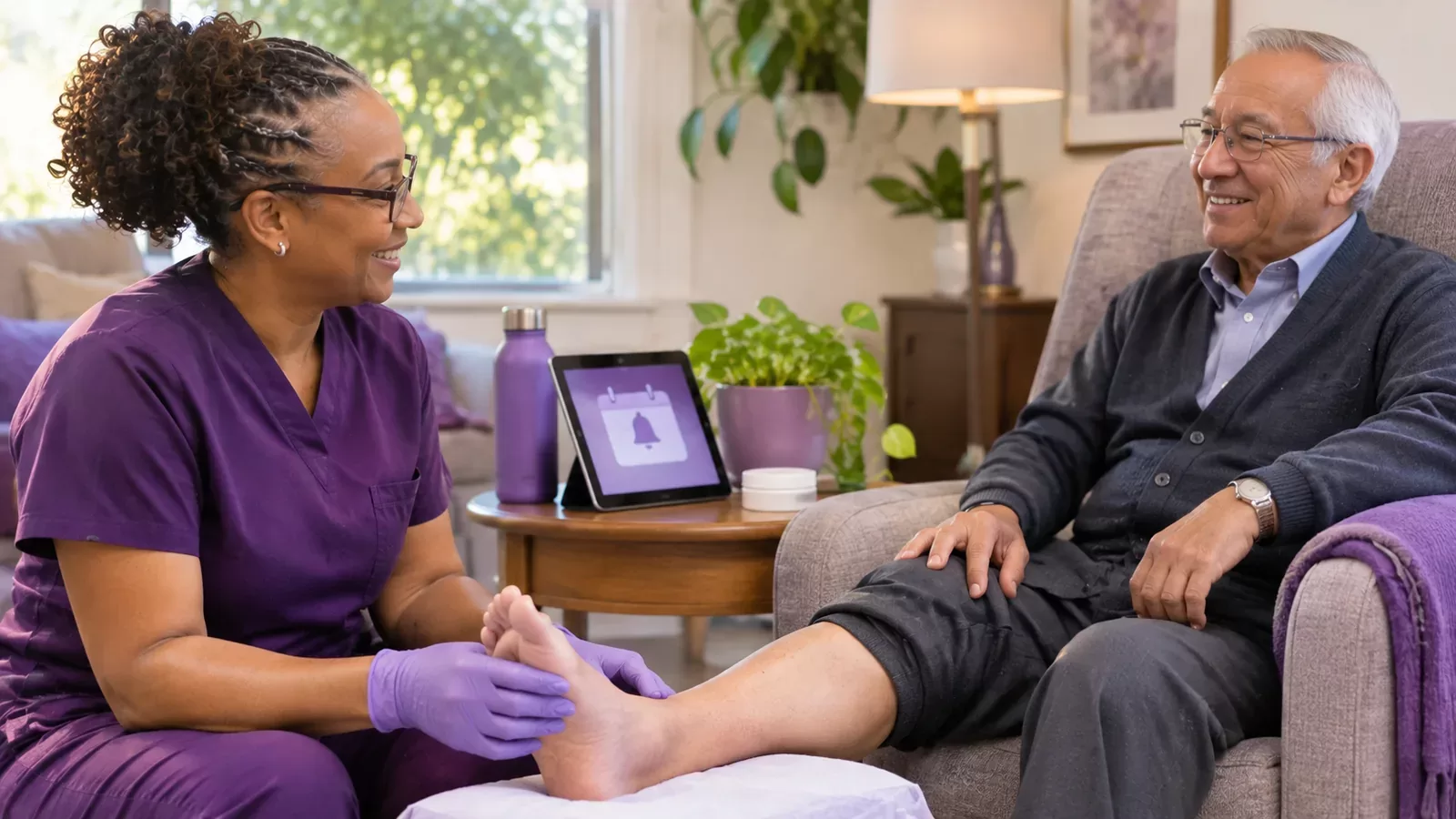
- Send reminders. Automated text or email reminders cut no-shows, especially for older clients.
- Document clearly. Consistent notes protect you, help with continuity and make it easy to share findings with the referring physician. See our tips on foot care charting.
- Close the loop. With client consent, a short note back to the referring professional shows them their referral was in good hands and makes the next referral more likely.
- Price with confidence. Clear, fair pricing builds trust. Our guide to foot care nursing pricing in Canada can help you set rates.
Track which referral sources work
Ask every new client how they heard about you and record it on their file. After a few months you will see which doctors, pharmacies and programs actually send people. Spend more time with the sources that work, and rethink the ones that do not. If you are still building your practice, our guide to starting a foot care nursing business in Canada covers the setup side.
Make every referral easy to book. CompanyOn gives foot care nurses online booking, automated reminders, charting and route planning in one app, so referred clients get a smooth experience from the first visit.
Frequently asked questions
How do foot care nurses get referrals from doctors?
Start with a short introduction letter that explains your credentials, services, service area and how patients can book. Drop it off in person, ask who handles referrals, and follow up with consented visit summaries so the office sees the value of referring.
Do pharmacies refer clients to foot care nurses?
Yes. Pharmacists often hear about foot problems at the counter and are happy to recommend a local foot care nurse if they know who you are and have your cards on hand.
What should a foot care referral letter include?
Your name and credentials, whether you offer mobile or clinic visits, your service area, the conditions you commonly see, how you share findings with consent, and how patients can book.
How can I keep referred foot care clients coming back?
Pre-book the next visit, send automated reminders, keep clear charting and stay in touch with the referring professional. Routine care on a regular schedule is what keeps clients loyal.