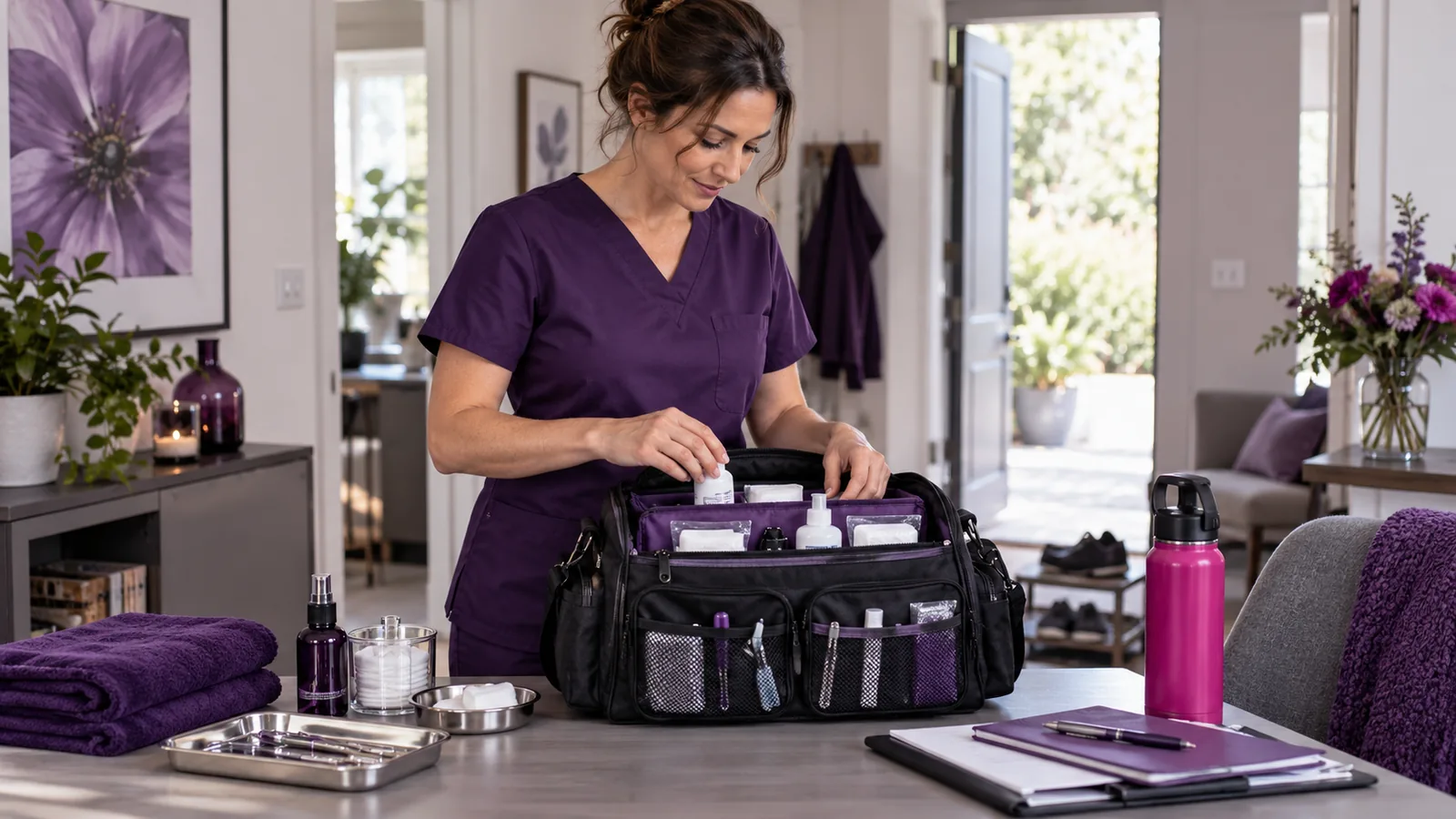
If you do foot care in people’s homes, your day is not just visits. It is the driving between them. A schedule that looks full on paper can fall apart the moment you are crossing town twice for two appointments that should have been back to back. That gap between the care you deliver and the hours you actually spend behind the wheel has a name in mobile nursing: windshield time. The less of it you have, the more patients you see, and the less wrecked you feel by 5 p.m.
This is a practical look at foot care nurse route planning: how to build a day that flows, add the buffers that keep you sane, and fit more home visits in without pushing yourself into burnout.
Windshield time is the real cost
When people think about a mobile nursing day, they count appointments. Your body counts kilometres. Two nurses can both have six visits booked, and one finishes calm at four while the other is still driving at six, because the routes were built completely differently.
Every unnecessary trip across town is time you are not paid for and energy you do not get back. Cutting that down is the single biggest lever you have. It is not about rushing patients. It is about arranging the day so the driving between them makes sense.
Group visits by geography, not just by request order
The most common scheduling mistake is booking patients in the order they call. It feels fair, and it quietly builds a route that zigzags across the map.
Instead, think in clusters. Group patients who live near each other into the same day or the same block of the day. A patient in the north end and a patient in the south end do not belong back to back unless there is a real reason. When you batch by area, home visit route optimization mostly takes care of itself: you finish one neighbourhood before moving to the next, and the drive between stops shrinks.

Build a loop, not a line
A good mobile day is shaped like a loop, not a straight line out and a long drive back. Start near home or your first cluster, work your way around, and end somewhere close to where you started. You avoid the dreaded long haul home at the end of a tired day, and you stop crossing your own path.
Anchor the loop around your fixed points first. If one patient can only be seen at 10 a.m., build the rest of the morning around that stop rather than fighting it later.
Add travel buffers on purpose
Travel time between patients is not dead space you can wish away. It is part of the visit. Foot care runs long sometimes, parking is not always there, and a five minute chat at the door is part of the care. If your schedule assumes teleportation between stops, one slow visit knocks the whole afternoon off track.
Give each leg a realistic buffer. A little breathing room between appointments is what lets you arrive calm, stay on time for the rest of the day, and handle the surprise without texting three patients to say you are running late. Consistent buffers are one of the quiet differences between a sustainable caseload and a stressful one.
Let your phone do the driving decisions
You should not be planning tomorrow’s route on a paper list at your kitchen table. Mobile clinician scheduling means your whole day lives on your phone: your visits in order, each address one tap from directions, and your notes ready wherever you are parked.
Mobile-first scheduling built for the way you actually work removes the mental load of holding the day in your head. You see your next stop, you see how to get there, and you document the visit before you turn the key. That is what mobile nursing scheduling is supposed to feel like, and it is a long way from juggling a printout and three apps.
Protect yourself from burnout
More visits should not mean a harder day. Done right, better routing gives you the opposite: the same number of patients with less driving, or more patients in the same hours without the extra strain. Cap your day at a number of visits you can actually sustain, keep your clusters tight, and let the buffers hold. Foot care nursing in Canada often means long distances and real weather, so a route that respects your energy is not a luxury. It is how you keep doing this work for years, not months.
Drive less, care more
Foot care nurse route planning is not about squeezing every minute out of your day. It is about spending your minutes on patients instead of pavement. Cluster by geography, build a loop, buffer your travel, and put the whole plan on your phone. Do that, and the day that used to end in exhaustion ends with visits to spare.
CompanyOn was built for mobile clinicians who live this every day. More than 1K+ practices across Canada & US use it to plan smarter days, cut windshield time, and document on the go from one secure app, which is part of why it holds a 4.8/5 average rating.
Book a demo and see how much of your day you can win back.