
Patient adherence in physiotherapy is the degree to which a patient actually completes the home exercises, frequency and dosage their physiotherapist prescribed between visits. It is one of the strongest levers you have on outcomes, and one of the hardest to control: the work that rebuilds a shoulder or a knee mostly happens at home, in the six days a week you are not in the room.
The short answer: patients complete home exercise programs when the program is short, specific and easy to remember, when they understand why each exercise matters, and when someone checks in before the next visit. Most drop-off is not laziness. It is a program that was too long, too vague or too easy to forget.
This guide covers why home exercise programs (HEPs) fail, seven practical tactics to improve adherence, and how to follow up between visits without adding hours to your week.
Why patients stop doing their home exercises
Low adherence is well documented. A widely cited systematic review of barriers to treatment adherence in outpatient physiotherapy (Jack and colleagues, 2010) reported that non-adherence to prescribed home exercise can reach as high as 70 percent. The same review linked poor adherence to a few recurring barriers:
- Low physical activity at baseline. Patients who were not active before the injury find it hardest to build a new habit.
- Low self-efficacy. If a patient is not confident they are doing an exercise correctly, they quietly stop doing it.
- Pain during exercise. Discomfort without an explanation reads as "this is making it worse."
- Anxiety, depression or low social support. Life outside the clinic competes with the program every day.
- Helplessness. Patients who do not believe they can influence their recovery see little reason to try.
Notice what is missing from that list: none of these are fixed by printing a longer handout. They are fixed by how the program is designed, explained and followed up.
7 tactics that improve home exercise adherence
1. Prescribe fewer exercises
Long programs are a common reason patients give up. Two to four exercises that take ten to fifteen minutes are far more likely to be completed than eight exercises that take forty. Choose the movements with the highest clinical value for this stage of recovery, and add or progress them at the next visit instead of front-loading everything on day one.
2. Attach each exercise to a goal the patient cares about
"Three sets of ten shoulder external rotations" is an instruction. "This is what gets you back to lifting your grandson" is a reason. Ask what the patient wants to do again, write that goal into their plan, and connect every exercise to it. When motivation dips midweek, the goal is what they remember.
3. Teach it in the room, then have them teach it back
Do not end the session by handing over a sheet. Have the patient perform each exercise in front of you, correct their form, and then ask them to explain when and how often they will do it. Teach-back exposes confusion while you can still fix it, and it builds the confidence (self-efficacy) that keeps people going at home.
4. Give instructions they can see, not just read
A systematic review by Emmerson and colleagues found that multimedia instruction, such as video demonstrations, improved adherence compared with written or verbal instructions alone. If you do not use a dedicated exercise video library, a short clip recorded on the patient's own phone during the session works surprisingly well: it shows their body, their space and your cues.
5. Anchor the program to an existing routine
Habits stick when they piggyback on something the patient already does. Agree on a specific trigger together: after morning coffee, before the evening news, while the kettle boils. "Do these daily" fails. "Do these right after you brush your teeth at night" has a real chance.
6. Explain what discomfort is normal
Pain is one of the main reasons patients abandon a program. Tell them in plain language what level of discomfort is expected, what is not, and what to do if it flares (reduce reps, skip one exercise, message the clinic). A patient who knows "a 3 out of 10 that settles within an hour is fine" will keep going through soreness instead of stopping for a week.
7. Make adherence part of every visit
Start each follow-up by asking how the program went, without judgment. Which exercises did they do? Which did they skip, and why? Record the answer in your notes so you can see patterns over time and adjust the program instead of repeating it. Patients take the program more seriously when they know you will ask.
Designing a program patients remember

A home exercise program that works fits on one page and answers five questions at a glance:
| Element | What to include | Example |
|---|---|---|
| Goal | The patient's own words | "Carry groceries up the stairs without knee pain" |
| Exercises | Two to four, with a simple name | Sit to stand, step-ups, bridges |
| Dosage | Sets, reps, hold time | 2 sets of 10, slow on the way down |
| Frequency and trigger | How often and when | Once a day, after breakfast |
| Safety rule | What to do if it hurts | If pain goes above 4 out of 10, stop and message us |
Keep the language patient-friendly and specific. Replace clinical shorthand with what they will actually feel and see. The most effective programs are the ones a patient could explain to a family member without looking at the page.
Document the same program in your clinical notes, so anyone in your clinic can see what was prescribed and progress it consistently. If you are already working on faster documentation, our guide to physiotherapy charting templates shows how to capture this without adding time to each visit.
Following up between visits
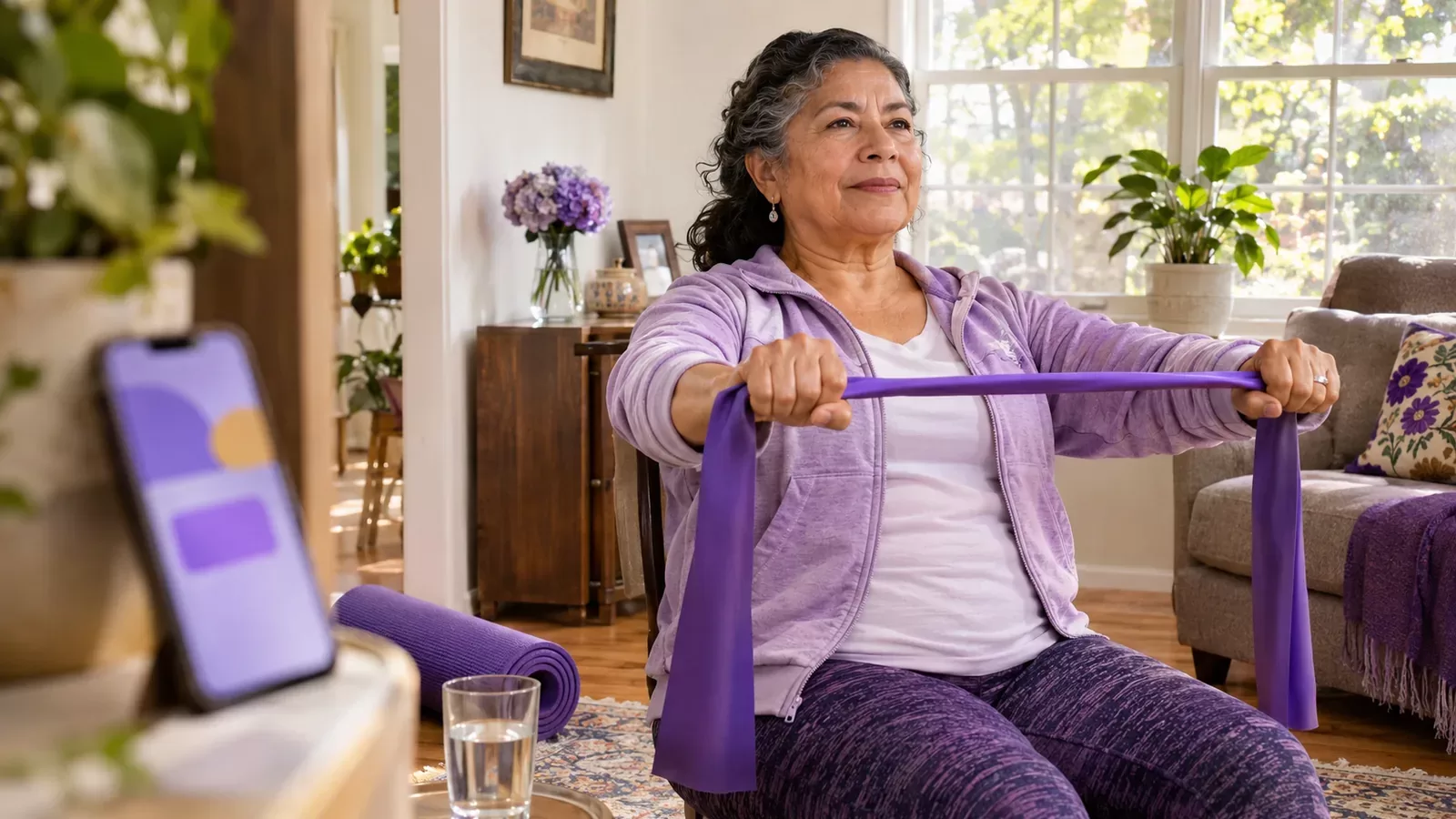
The gap between appointments is where most programs fall apart. A light, consistent follow-up routine closes that gap:
- Day 2 or 3 check-in. A short message asking how the first sessions went catches confusion and early pain before the patient quits.
- Midpoint reminder. For visits more than a week apart, a reminder halfway through keeps the program top of mind.
- Pre-visit prompt. Ask the patient to note which exercises felt easy or hard, so the next session starts with useful information.
- Progress, then celebrate. When a patient reaches a milestone, progress the program and tell them why. Visible progress is one of the best motivators there is.
Follow-up also protects your schedule. Patients who stay engaged with their program are more likely to keep their appointments, which is why adherence and attendance tend to rise together. For the attendance side, see how to reduce no-shows in a physiotherapy clinic.
Where practice software helps (and where it does not)
Software will not motivate a patient for you, but it removes the admin that makes follow-up hard to sustain. In CompanyOn for physiotherapists, you can:
- Send automated appointment reminders by text and email, so patients arrive ready to review their program.
- Let patients rebook themselves through online scheduling when their week changes, instead of dropping out.
- Record the prescribed program, adherence notes and progress in each patient's clinical record, so every visit builds on the last one.
- Keep contact details, history and communication in one patient profile, which makes a quick between-visit check-in easy to send.
The human part stays with you: choosing the right exercises, connecting them to the patient's goals and noticing when someone is struggling. For more ideas on keeping patients engaged over a full plan of care, read our patient retention strategies for small clinics.
Spend your time on patients, not paperwork. See how CompanyOn handles scheduling, reminders, notes and billing for physiotherapy clinics in one place.
Frequently asked questions
What is a good adherence rate for a home exercise program?
There is no universal benchmark, but research consistently shows that a large share of patients do not complete their programs as prescribed. A practical target is that most patients complete most of their sessions each week. Track it simply by asking at every visit and noting the answer.
How many exercises should a home exercise program include?
Two to four exercises is a strong default. Shorter programs that take ten to fifteen minutes are easier to fit into daily life and more likely to be completed. Add or progress exercises at follow-up visits rather than prescribing everything at once.
Do video instructions really improve adherence?
Evidence suggests they do. A systematic review found that multimedia instruction improved adherence compared with written or verbal instructions alone, and video also helps patients reproduce exercises more accurately at home.
How often should I follow up with patients between visits?
A quick check-in two or three days after a new program, plus a reminder midway between visits that are more than a week apart, covers most patients. Keep messages short and make it easy for patients to reply with questions or concerns.