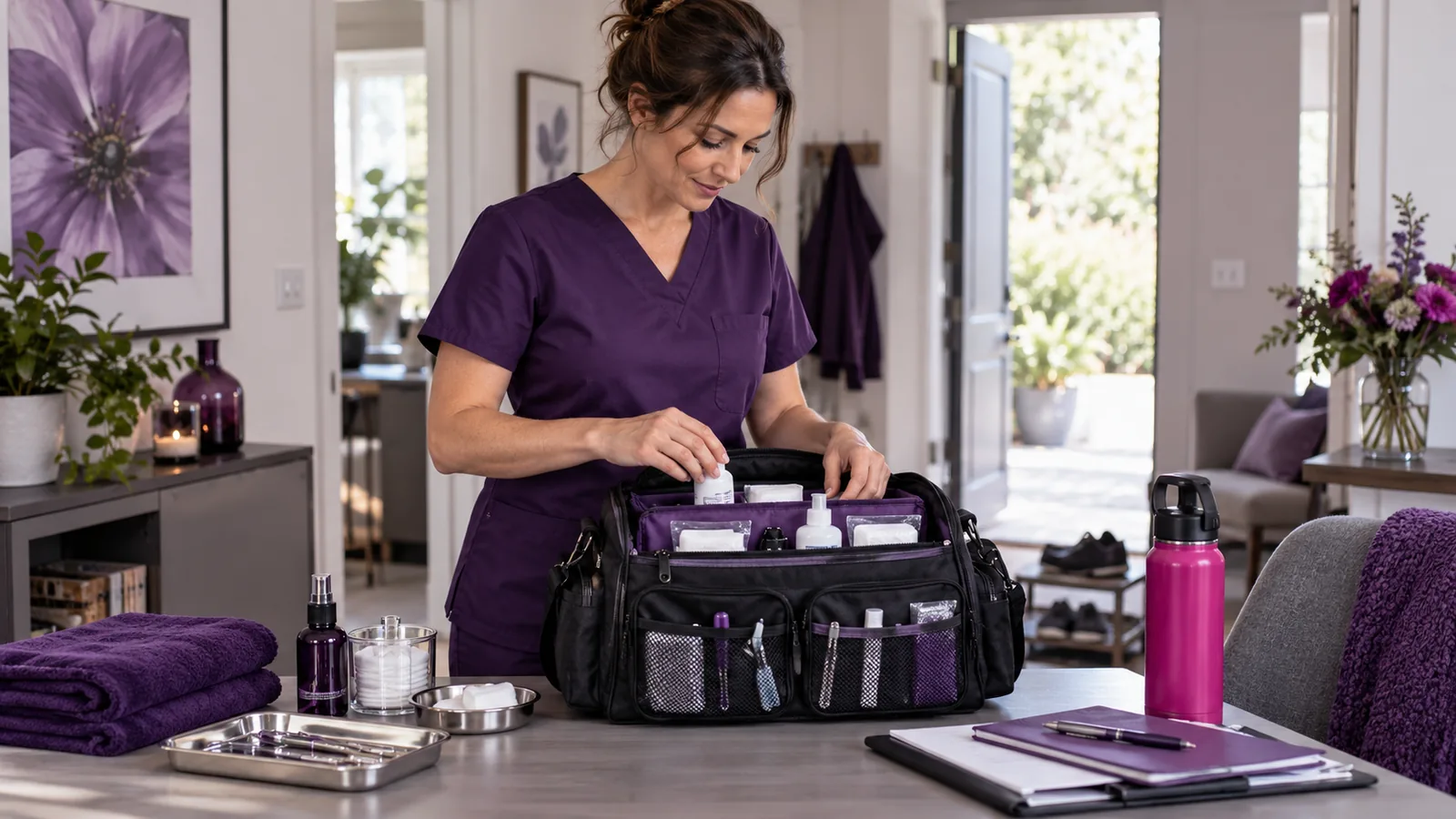
For a foot care nurse, infection prevention is not paperwork. It is the practice. Safe instrument reprocessing and solid infection control protect your patients from harm and protect your license from a preventable finding. Foot care devices have been linked to healthcare-associated infections and outbreaks, which is exactly why the standards around them are strict and worth knowing cold.
Here is the core principle everything else builds on. Reusable foot care instruments (nail nippers, curettes, scalers, and debridement blades) are critical devices under the Spaulding classification, because they contact or penetrate non-intact skin. Critical devices must be sterile at the point of use, so every client interaction requires a sterile set of instruments. That single rule shapes how you clean, package, sterilize, store, and document your tools, whether you work in a clinic or drive to clients at home.
The standards that apply in Canada
Foot care nurses in Canada work within a clear framework. IPAC Canada publishes practice recommendations specifically for infection prevention and control related to foot care, the Public Health Agency of Canada and Health Canada set national expectations, and CSA Z314 governs medical device reprocessing, including steam sterilization. Provincial nursing regulators expect you to follow these standards, and they can ask to see proof.
Two rules are worth memorizing. First, when a manufacturer’s instructions for use (MIFU) and the Spaulding classification disagree on the level of reprocessing, you use the more stringent one. Second, any disinfectant you use must carry a Drug Identification Number (DIN) from Health Canada. Household cleaning products are not validated for medical devices and should never be used to reprocess instruments.
Why foot care instruments are “critical”
The Spaulding classification sorts every reusable device by the risk its contact creates.
Critical items enter sterile tissue or contact broken skin, so they must be sterilized. Semi-critical items contact intact mucous membranes or non-intact skin and require at least high-level disinfection, with sterilization preferred. Non-critical items touch only intact skin and need cleaning and low-level disinfection.
Foot care sits at the sharp end of this scale. Trimming thickened nails, reducing corns and calluses, and debriding tissue routinely involve non-intact skin, and even when you expect intact skin, a small break can happen without warning. When there is any doubt about whether a procedure will contact broken skin, the safer default is to treat the instrument as critical and sterilize it.
The instrument reprocessing workflow, step by step
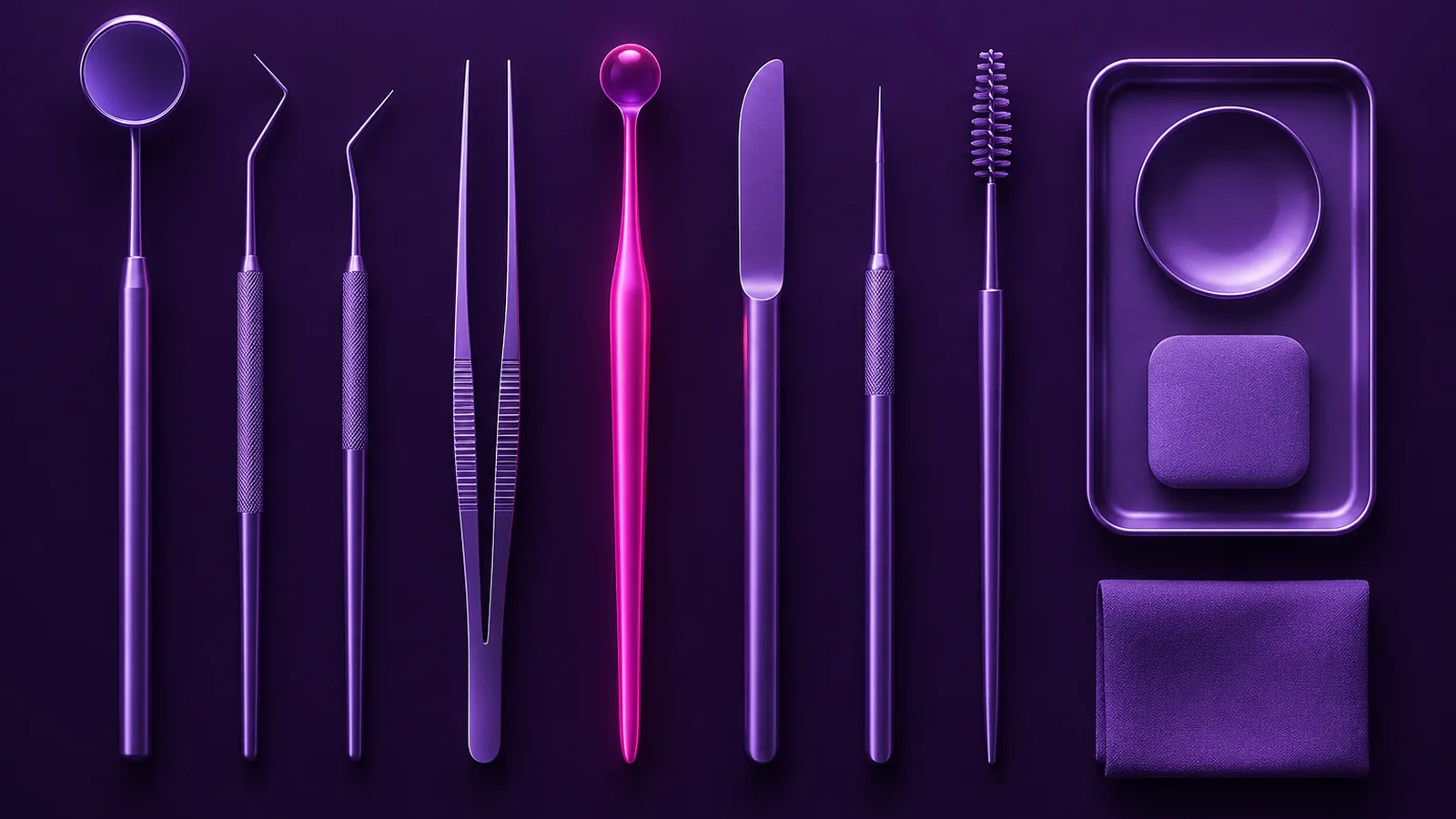
Reprocessing is a sequence, and skipping or shortening a step is where risk creeps in. The workflow moves in one direction, from dirty to clean, with clear separation between the two.
- Point-of-care pre-clean. Wipe or keep instruments moist right after use so debris does not dry on. Dried bioburden is much harder to remove later.
- Cleaning. Clean thoroughly with a detergent chosen for the device and used per its MIFU. Cleaning is the foundation. Nothing can be sterilized until it is physically clean.
- Inspection. Check each instrument for remaining debris, damage, or wear. Reclean anything that is not spotless, and retire anything damaged.
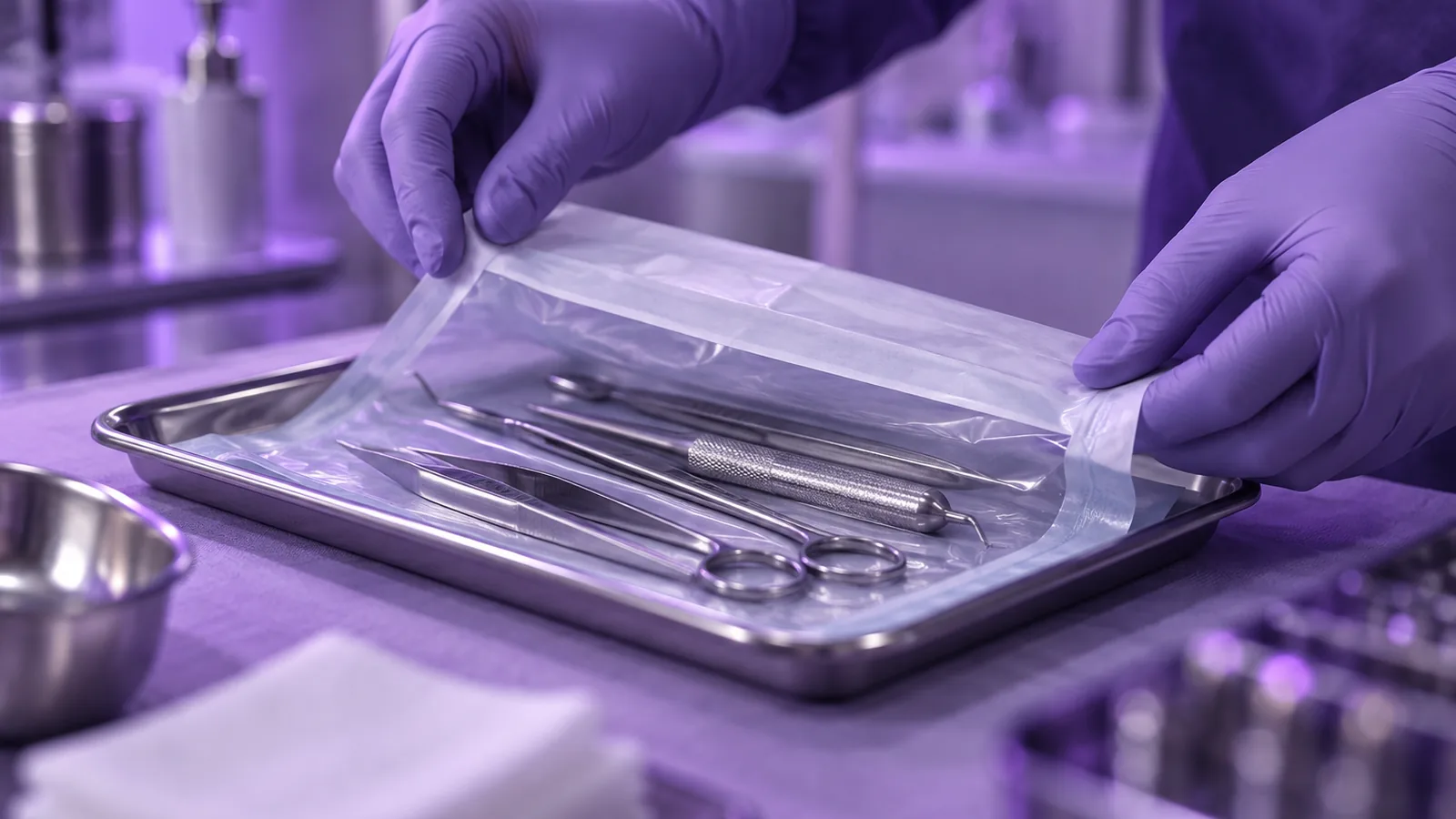
- Packaging. Package instruments for sterilization in the correct pouches or wraps so they stay sterile until the moment of use.
- Sterilization. Sterilize using steam (autoclave) that meets CSA Z314. Steam sterilization is the standard for reusable foot care instruments.
- Sterility monitoring. Use chemical indicators on every load and run biological indicator testing on a documented schedule to confirm the sterilizer is actually working. Keep the results.
- Storage. Store sterile packs clean, dry, and protected so packaging integrity is not compromised before use.
- Documentation. Record that cleaning and sterilization happened as required, including load and indicator results. If you cannot show it, an auditor treats it as if it did not happen.
Three compliant ways to handle reusable instruments
You do not have to run a sterilizer yourself to be compliant, but you do have to choose one of these paths and follow it fully.
The first option is single-use instruments, opened fresh for each client and discarded safely after. The second is contracting a centralized Medical Device Reprocessing Department (MDRD) that meets CSA standards and uses qualified technicians, with pre-cleaning done before instruments are sent out. The third is reprocessing reusable instruments yourself, following IPAC Canada’s foot care guidance, CSA Z314, and MIFU, with the equipment, space, and documentation that requires. Each path is valid. Mixing them carelessly is where agencies and independent nurses get into trouble.
Infection control beyond the instruments
Sterile tools are necessary but not sufficient. The rest of your routine matters just as much.
Hand hygiene before and after every client, and after glove removal, remains the single most effective control. Wear appropriate personal protective equipment, and remember that reducing nails with a rotary tool creates fine dust, so a surgical mask is a minimum during drilling, with eye protection where indicated. Practise safe sharps management and dispose of blades and other sharps properly. Clean and disinfect the client contact surfaces and any shared equipment between clients using a DIN-registered product. Keep a documented cleaning schedule, and design your setup so clean and dirty items never cross paths.
A note for mobile and home care foot care nurses
Working in a client’s home does not lower the bar. Clients expect and require safe care regardless of where the procedure happens, which still means a sterile set of critical instruments for every single visit. Since you cannot run an autoclave at the kitchen table, that usually means carrying enough pre-sterilized sets for your route, using single-use instruments, or reprocessing centrally between visits. Plan your instrument inventory around your schedule so you never face the temptation to reuse a set that has not been reprocessed.
Documentation protects your license
Regulators do not just want to hear that you follow good practice. They want to see it. Keep a documented IPAC plan with written policies and procedures, your sterilization and cleaning logs, your chemical and biological indicator results, and records of your infection control training. Complete, retrievable records turn a regulatory review from a stressful event into a routine one, and they are the clearest proof that your care is safe.
This is where good practice management software earns its place. Instead of scattered paper logs, CompanyOn keeps your scheduling, secure client documentation, and records in one mobile-friendly platform, so the proof of safe care travels with you between the clinic and the field. Trusted by 1K+ practices across Canada & US with a 4.8/5 average rating, and built on HIPAA and PIPEDA-aligned security with SSL protection, it helps foot care nurses stay organized and audit-ready. If foot care is your focus, see how it fits your day on our foot care nursing solutions page.
Frequently asked questions
Do foot care instruments have to be sterilized between patients? Yes. Reusable foot care instruments are classified as critical devices because they contact non-intact skin, so they must be sterilized between clients, or you use single-use instruments. Each client interaction requires a sterile set.
Can I use high-level disinfection instead of sterilization for foot care tools? For critical foot care instruments, sterilization is the required outcome. High-level disinfection is the minimum only for semi-critical devices, and even then sterilization is preferred. When in doubt, treat the instrument as critical.
What sterilization method should I use? Steam sterilization (autoclave) that meets CSA Z314 is the standard for reusable foot care instruments, with chemical indicators on every load and documented biological indicator testing.
How do infection control rules apply during home visits? They apply fully. A sterile set is required for every visit regardless of setting, so mobile nurses typically carry pre-sterilized sets, use single-use instruments, or reprocess centrally between visits.
What documentation should I keep? A written IPAC plan, cleaning and sterilization logs, chemical and biological indicator results, and training records. Keep them complete and retrievable for regulatory review.
Keep safe care organized
Great infection control deserves records that are just as clean. Book a demo to see how CompanyOn keeps your documentation and schedule audit-ready, or start your free 14-day trial and run it on your own caseload.