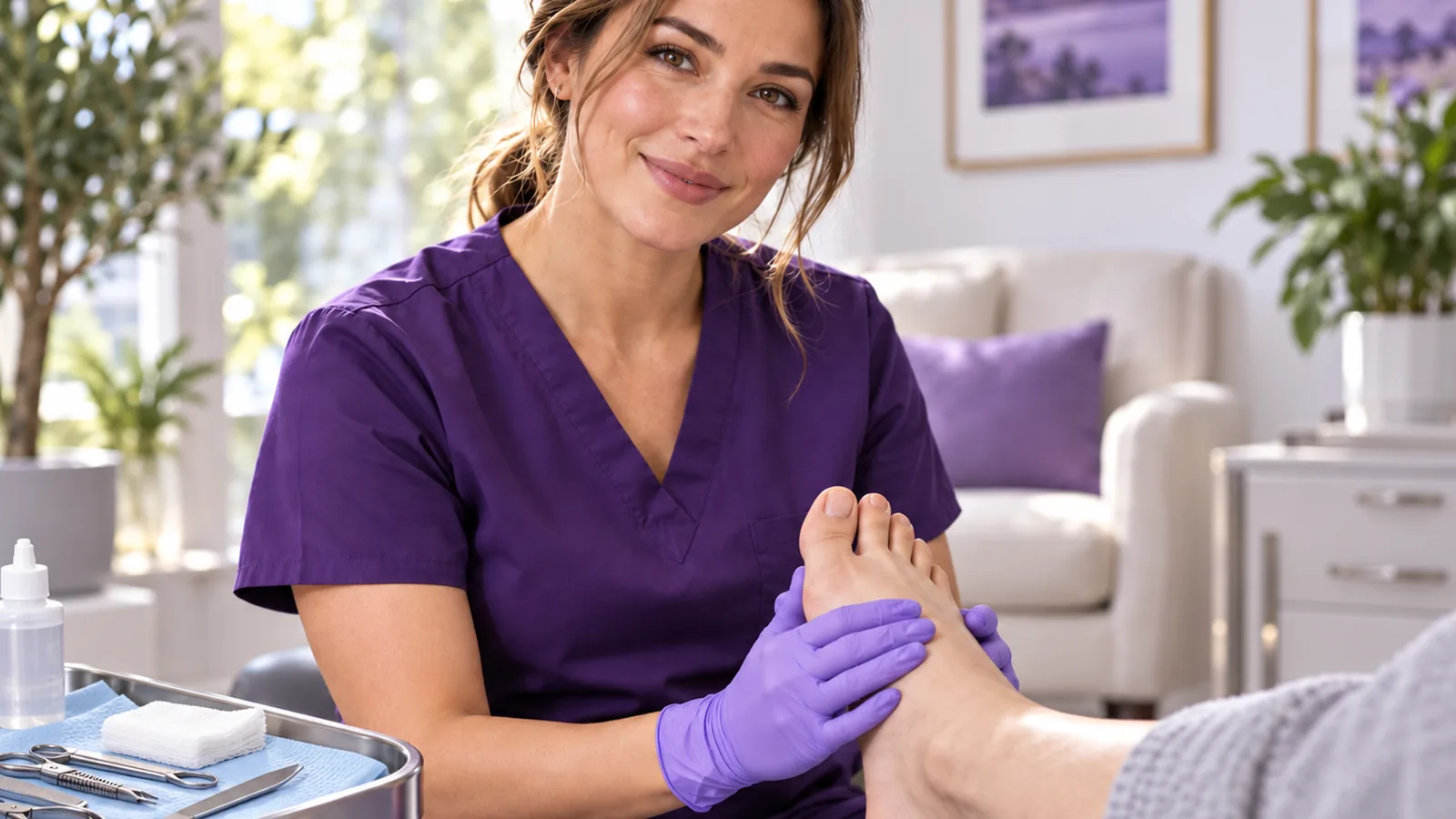
Foot care nursing is one of the most rewarding ways for a nurse in Canada to build an independent, in-demand practice. But the path into it confuses a lot of people, partly because there has not been one single national credential to point to. This guide lays out how you actually become a certified foot care nurse in Canada, what training is involved, and, just as importantly, what your scope of practice does and does not include.
A foot care nurse is a licensed nurse who has completed additional training to provide skilled, preventive foot care. You do not become a foot care nurse instead of being a nurse. You become one on top of your nursing license, by adding foot care competencies through recognized training. Here is how that works, step by step.
Step 1: Be a licensed nurse
The foundation is an active nursing license. Registered Nurses (RN), Registered Practical Nurses or Licensed Practical Nurses (RPN or LPN, depending on the province), and Nurse Practitioners (NP) can all pursue foot care nursing. Your provincial or territorial nursing regulator governs your practice, and foot care is delivered within that existing nursing scope, not under a separate “foot” college. That distinction matters, and we come back to it below.
Step 2: Complete foot care training

Foot care training in Canada is typically delivered in two stages by recognized education providers.
Basic foot care covers assessment, routine nail and skin care, and safe technique for lower-risk clients. Advanced foot care builds on that with high-risk and diabetic foot care, management of complex nails and calluses, and the clinical knowledge to work safely with vulnerable clients. Advanced programs usually combine a substantial block of self-paced theory with several days of hands-on clinical training with real patients, and align their curriculum to national competencies and infection control standards.
Choosing a program that follows current national competencies and IPAC Canada reprocessing standards matters, because that is what prepares you for both safe practice and formal certification.
The certification landscape in Canada
This is the part that trips people up, so here is the clear version.

For years, there was no single national certification exam for foot care nurses. Instead, nurses earned a certificate of completion from a recognized training provider, and some programs award the Certified Foot Care Nurse (CFCN) designation. Alongside that, the Canadian Association of Foot Care Nurses (CAFCN) published a National Competency Framework, updated in 2025, that defines what an advanced foot care nurse should be able to do.
The big development: the Canadian Nurses Association (CNA) is introducing a national, portfolio-based Foot Care Nursing certification, expected to launch in fall 2026. Rather than a single exam, it recognizes your expertise through a portfolio of your real-world experience and competencies. This is a meaningful step toward standardizing the credential nationwide, so it is worth confirming the current status directly with the CNA as it rolls out.
In practical terms today: complete recognized basic and advanced foot care training, keep your nursing license in good standing, and position yourself to pursue the national certification as it becomes available.
Your scope of practice: what it does and does not include
Because foot care is delivered within your nursing scope, it is essential to know where that scope ends. Staying inside it protects your clients and your license.
| Within a foot care nurse’s scope | Refer out (chiropodist, podiatrist, or physician) |
|---|---|
| Comprehensive foot assessment and high-risk screening | Diagnosing disease |
| Nail trimming, thinning, and routine nail care | Nail or soft-tissue surgery |
| Callus and corn reduction | Prescribing medication |
| Diabetic and high-risk foot care and monitoring | Treating ulcers that need medical or surgical management |
| Health teaching and prevention | Injections and controlled acts outside nursing scope |
| Timely referral when findings exceed your scope |
A foot care nurse assesses, provides skilled preventive care, educates, and refers. Diagnosing conditions, performing surgery, and prescribing belong to other regulated professionals. If you are unclear on where the lines fall between roles, our guide to foot care nurse vs chiropodist vs podiatrist breaks it down. And recognizing when to escalate is a skill in itself, covered in our guide to recognizing high-risk feet.
Why the credential is worth it
Certified foot care nursing opens real doors. The need is large and growing, especially among older adults and people living with diabetes. Advanced training from recognized providers is often recognized by extended health insurers, which means your future clients can claim their visits, widening your potential client base. And because you can practise independently and in the community, foot care nursing supports a flexible, mobile business, from private clients to recurring work with retirement residences and long-term care homes.
It also comes with responsibility: safe instrument reprocessing between every client is central to the role. Our guide to infection prevention and instrument care for foot care nurses covers the standards you will be held to.
How software supports your foot care practice
Once you are certified and seeing clients, the practice side begins: scheduling recurring visits, charting assessments, tracking high-risk clients, and getting paid. CompanyOn is practice management software built for care on the go, trusted by 1K+ practices across Canada & US with a 4.8/5 average rating. It handles recurring scheduling, mobile charting you can complete during the visit, and billing, all protected with HIPAA and PIPEDA aligned security and SSL protection. If foot care is your focus, see how it fits your workflow on our foot care nursing solutions page.
Frequently asked questions
How do I become a certified foot care nurse in Canada? Hold an active nursing license (RN, RPN, LPN, or NP), complete recognized basic and advanced foot care training that includes theory and hands-on clinical practice, and keep your practice within your nursing scope. A national portfolio-based certification through the Canadian Nurses Association is expected to launch in fall 2026.
Is there a national foot care nurse certification in Canada? For years there was no single national exam, only certificates from recognized training providers and the CFCN designation. The Canadian Nurses Association is introducing a national, portfolio-based Foot Care Nursing certification expected to launch in fall 2026, so confirm the current status with the CNA.
How long does advanced foot care training take? It varies by provider, but advanced programs typically combine a large block of self-paced online theory with several days of hands-on clinical training. Plan for a meaningful time commitment rather than a weekend course.
Can any nurse do foot care? Foot care is open to RNs, RPNs, LPNs, and NPs who complete the additional training. It is delivered within your existing nursing scope and under your provincial or territorial regulator.
What is a foot care nurse not allowed to do? Foot care nurses do not diagnose disease, perform nail or soft-tissue surgery, prescribe medication, or manage ulcers that require medical or surgical treatment. Those fall to chiropodists, podiatrists, or physicians, and warrant a referral.
Is foot care nursing a good business to start? Yes. Demand is high, advanced training is often recognized by extended health insurers, and the work suits independent, mobile, and community-based practice, including recurring contracts with facilities.
Build your foot care practice on solid footing
Certification gets you in the door. The right tools help you build a practice that lasts. Book a demo to see how CompanyOn supports foot care nurses with scheduling, charting, and billing, or start your free 14-day trial and run it on your own caseload.
Book a Demo or Start Free 14-Day Trial
This article is general information, not legal or regulatory advice. Certification and scope of practice are governed by your provincial or territorial nursing regulator, so confirm the specifics with them and with the CNA.